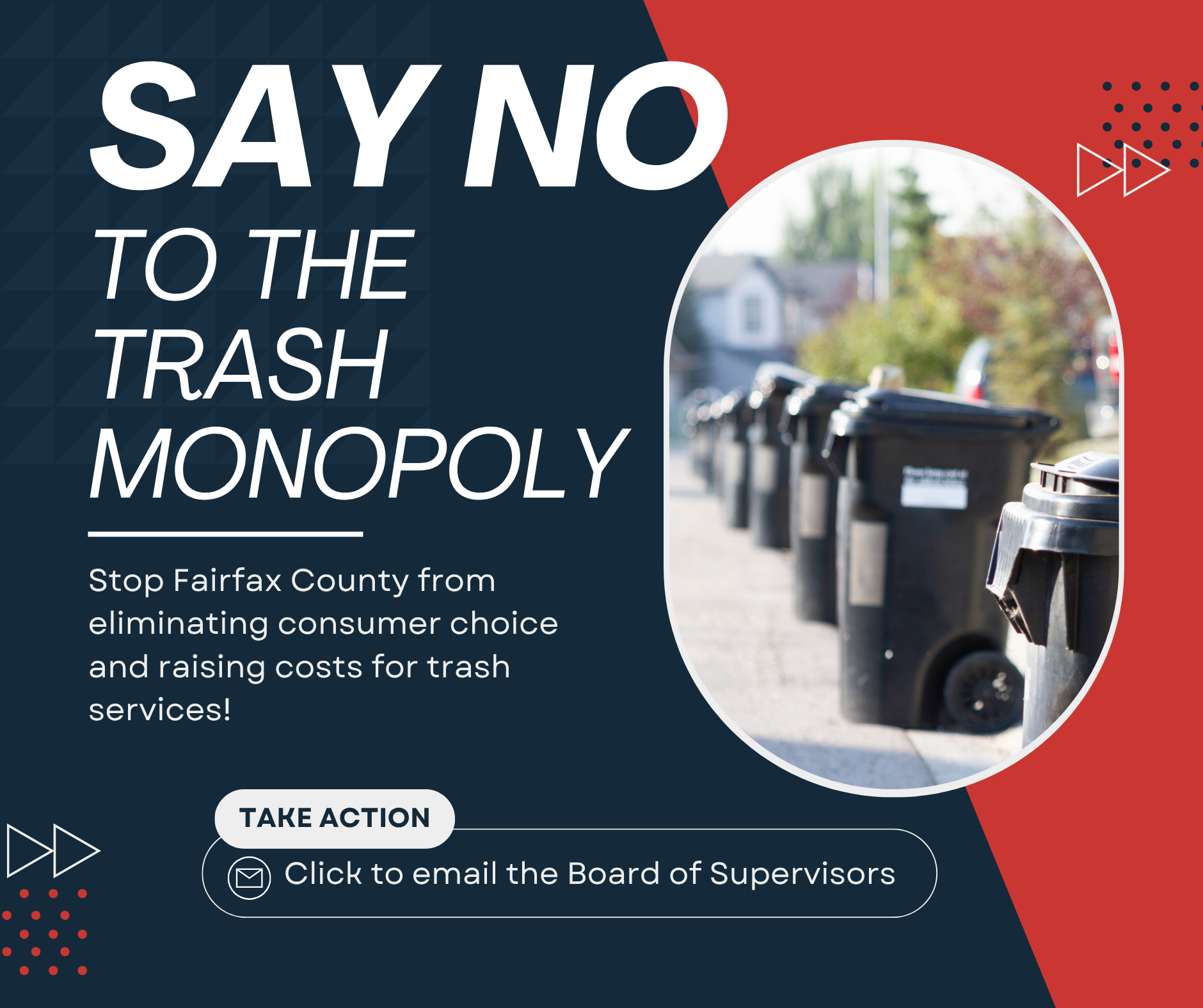
Protect Your Choice: Say No to Fairfax County's "Waste Monopoly!"
Take Action: The proposed restructuring of Fairfax County's trash collection system into Unified Sanitation Districts has raised significant concerns among residents and stakeholders. While the plan aims to streamline operations, it could disrupt the current market dynamics that offer consumer choice and competitive pricing.
Currently, Fairfax County residents benefit from the flexibility to select from various trash service providers, such as American, Republic, Bates, or Evergreen, based on cost, service level, and convenience. This competitive environment encourages innovation and responsiveness among providers.
Key reasons to oppose the proposed changes include:
- Loss of Consumer Choice: The consolidation of service providers could limit options, reducing the ability of residents to select services that best meet their needs and preferences.
- Increased Bureaucracy: The plan involves expanding the county workforce by 62 employees, which could lead to higher taxpayer burdens due to increased salaries and pensions.
- Government Overreach: Mandatory recycling and composting initiatives, potentially enforced by "trash police", are seen as excessive governmental intervention.
- Unfair Penalties: The "Pay As You Throw" system could disproportionately impact larger households by charging based on bin size, potentially promoting illegal dumping to avoid fees.
- Impact on Local Businesses: Small, local haulers may struggle to compete with larger contractors, leading to closures and reduced market diversity. This could result in less personalized service and higher prices for residents.
- Questionable Zero Waste Goals: Critics argue that the zero-waste objective overlooks the limitations of recycling processes, such as the finite recyclability of plastics and paper.
Overall, the proposed changes are viewed as a departure from a free-market economy where residents can use their purchasing power to influence service quality and cost. Critics suggest regulatory measures to level the playing field without dismantling the current system, such as requiring service providers to offer varied waste bin sizes or increasing landfill tipping fees to naturally incentivize waste reduction.
In summary, the Fairfax County trash system overhaul is criticized for potentially increasing costs, unnecessarily expanding government, reducing consumer choice, and threatening small businesses. The plan's enforcement mechanisms and ambitious zero-waste goals are also points of contention, leading many to see these changes as a step back from the current competitive, consumer-driven framework.
Make your voice heard! Every action counts!
Take Action Now!
Send An Email To The Board of Supervisors
Enter your name and locality in the spaces provided. With just a few clicks, find your elected representatives and email them about the impending trash system overhaul. Your participation can make a significant difference by helping to uphold consumer choice and competitive prices. It's easy and quick. Be heard!
Enter your name and details:
By providing your email address, you consent to receive recurring email messages. You can unsubscribe at any time by clicking the unsubscribe link in any email. Your personal information will be handled in accordance with our Terms & Conditions and Privacy Policy.
Protect Your Choice: Say No to Fairfax County's "Waste Monopoly!"
Take Action: The proposed restructuring of Fairfax County's trash collection system into Unified Sanitation Districts has raised significant concerns among residents and stakeholders. While the plan aims to streamline operations, it could disrupt the current market dynamics that offer consumer choice and competitive pricing.
Currently, Fairfax County residents benefit from the flexibility to select from various trash service providers, such as American, Republic, Bates, or Evergreen, based on cost, service level, and convenience. This competitive environment encourages innovation and responsiveness among providers.
Key reasons to oppose the proposed changes include:
- Loss of Consumer Choice: The consolidation of service providers could limit options, reducing the ability of residents to select services that best meet their needs and preferences.
- Increased Bureaucracy: The plan involves expanding the county workforce by 62 employees, which could lead to higher taxpayer burdens due to increased salaries and pensions.
- Government Overreach: Mandatory recycling and composting initiatives, potentially enforced by "trash police", are seen as excessive governmental intervention.
- Unfair Penalties: The "Pay As You Throw" system could disproportionately impact larger households by charging based on bin size, potentially promoting illegal dumping to avoid fees.
- Impact on Local Businesses: Small, local haulers may struggle to compete with larger contractors, leading to closures and reduced market diversity. This could result in less personalized service and higher prices for residents.
- Questionable Zero Waste Goals: Critics argue that the zero-waste objective overlooks the limitations of recycling processes, such as the finite recyclability of plastics and paper.
Overall, the proposed changes are viewed as a departure from a free-market economy where residents can use their purchasing power to influence service quality and cost. Critics suggest regulatory measures to level the playing field without dismantling the current system, such as requiring service providers to offer varied waste bin sizes or increasing landfill tipping fees to naturally incentivize waste reduction.
In summary, the Fairfax County trash system overhaul is criticized for potentially increasing costs, unnecessarily expanding government, reducing consumer choice, and threatening small businesses. The plan's enforcement mechanisms and ambitious zero-waste goals are also points of contention, leading many to see these changes as a step back from the current competitive, consumer-driven framework.
Make your voice heard! Every action counts!
Paid for by Paid for by Fairfax County Republican Committee. Not authorized by any candidate or candidate committee.